
TCEQ AEROBIC & CONVENTIONAL SEPTIC OSSF INSPECTIONS.
TCEQ Chapter 285 compliant septic evaluations. We test aerobic treatment units (ATU), trash interceptor tanks, aerator compressors, effluent pumps, chlorine tablet feeders, and surface spray distribution heads.




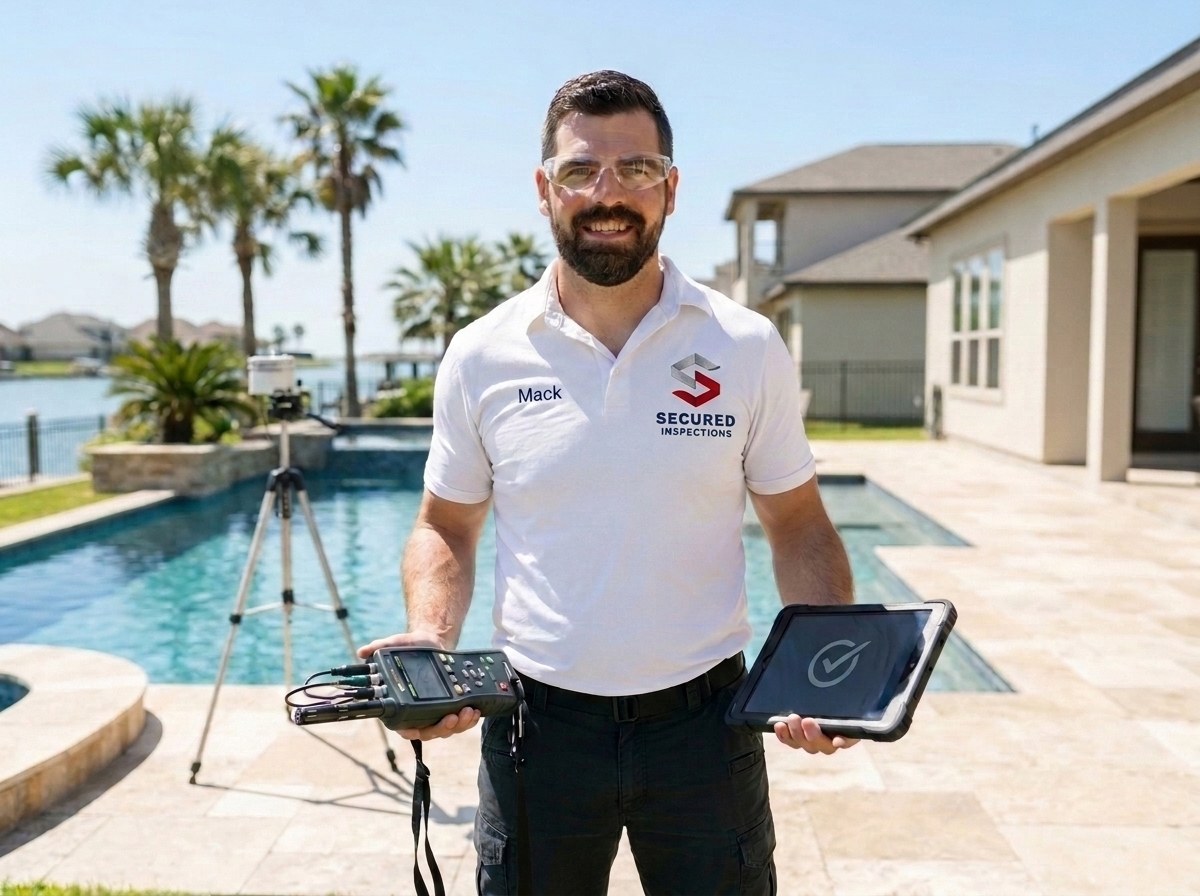
Meet Inspector Mack & The Secured Team
Every inspection is led directly by TREC Professional Master Inspectors using calibrated diagnostic gear. We don't just check cosmetic boxes—we map subgrade foundation movement, scan thermal anomalies through solid sheetrock, and scope subterranean lateral lines to defend your earnest money and equity.
 Inspector Mack • TDLR & SPCS
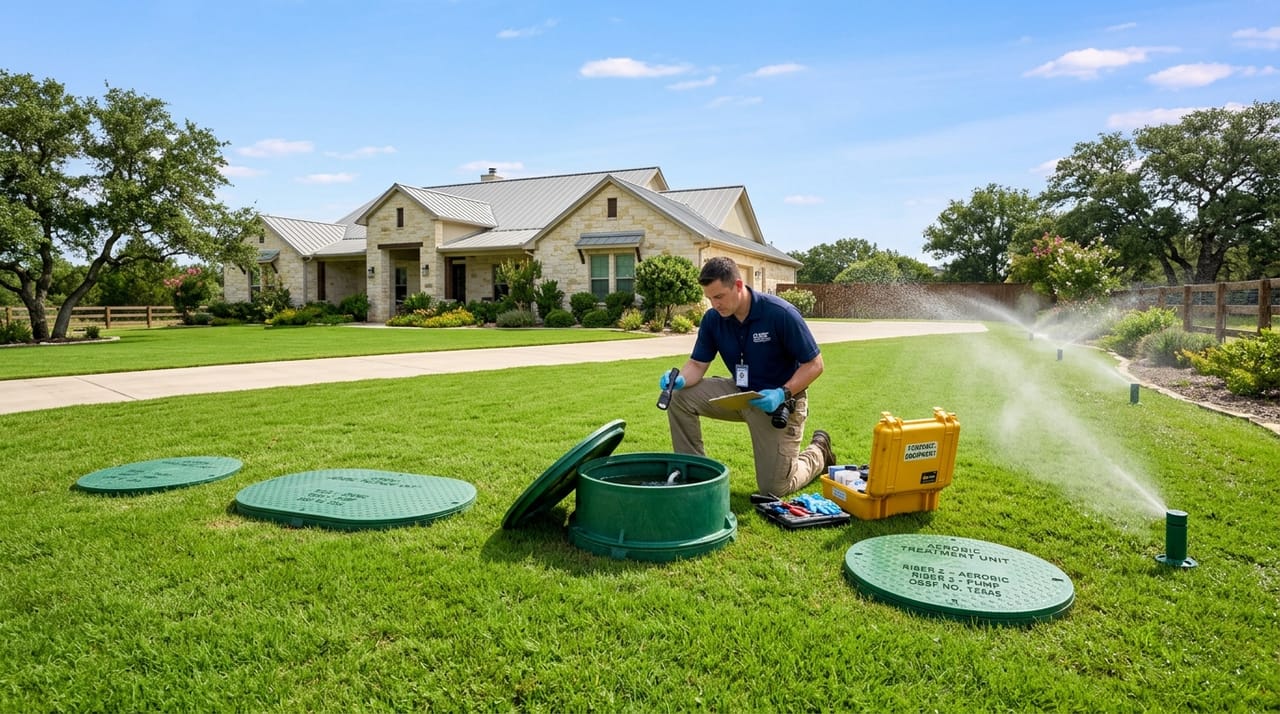
Texas Septic Secrets: Aerobic Systems, Compressors & Dye Tests
Inspector Mack explains why 40% of rural Texas septic systems have failing pumps or illegal chlorine setups.
"Never put pool chlorine tablets into an aerobic septic chlorinator. Pool chlorine produces toxic explosive nitrogen chloride gas when mixed with sewage. Aerobic systems require certified wastewater-grade calcium hypochlorite."
WHAT WE SPECIFICALLY AUDIT & DELIVER
Our forensic checklist exceeds standard minimum requirements. Every component is rigorously evaluated and cataloged with high-resolution imagery and severity tiers:
Trash Interceptor Tank & Sludge Depth
Using the Sludge Judge core sampler to measure sludge layer thickness and floating scum layer in the primary settling tank.
Aeration Chamber & Air Compressor
Checking air compressor pressure delivery, diaphragm integrity, air diffuser bubblers, and dissolved oxygen levels.
Clarifier Chamber & Sludge Return Line
Inspecting conical clarifier settling, clarity of effluent liquid, and operational status of the sludge hopper return.
Effluent Pump Chamber & High-Water Floats
Testing submersible effluent pump amp draw, on/off mechanical float switches, and high-water emergency alarm horn/strobe.
Chlorinator Tube & Tablet Supply
Auditing tablet feeder chlorinator, liquid bleach pump injectors, tablet bridging, and effluent residual chlorine levels.
Surface Spray Heads / Drip Irrigation Lines
Testing spray head pressure, spray radius, broken or buried heads, 10-foot boundary setback compliance, and timing clocks.
Conventional Drainfield Hydraulic Dye Test
Injecting non-toxic fluorescent tracing dye under high water volume load to detect surface breakouts in lateral lines.
Control Panel & County Permitting Review
Inspecting timer clock dials, manual test switches, circuit breakers, and reviewing county OSSF license-to-operate records.
Texas Gulf Coast Environmental Defect Matrix
Southeast Texas structures face unique environmental stressors that generic national inspection checklists routinely overlook. We specialize in identifying these regional failure modes:
Seized Aerator Compressor Motor
Linear diaphragm compressor motor burns out, halting biological oxygen injection into the treatment chamber.
Clogged or Bridged Chlorine Tablet Tube
Moisture in the chlorinator tube cakes tablets together into a solid plug, preventing chlorine from dissolving in effluent.
Saturated Conventional Drainfield Breakout
Heavy clay soil absorption failure causing effluent to surface above lateral trenches during continuous water flow tests.
Advanced Diagnostic Equipment Suite
Human eyes alone miss hidden electrical hotspots, subterranean pipe collapses, and millimeter-level slab deflections. Every Secured Inspections vehicle is equipped with industrial instrumentation:
15-Foot Clear 'Sludge Judge' Core Sampler
Graduated sampling tube extracting an exact cross-section of tank liquid, scum, and bottom sludge layers.
Fluorescent Water-Tracing Dye
High-visibility eco-friendly fluorescent dye tracing hydraulic flow paths and surfacing effluent breakouts.
Digital True-RMS Amp Clamp Meter
Measures electrical current draw on effluent pumps and aerator compressors to verify motor health.
Chlorine Residual & Dissolved Oxygen Kit
Measures parts-per-million (ppm) chlorine residual and DO levels to verify pathogen disinfection.
Actual Field Finding & Financial Impact
Here is an authentic defect documented in our recent inspections, demonstrating how our forensic reports deliver tangible financial leverage:
Seized Aerator Compressor & Disconnected High-Water Alarm
Our septic inspection revealed that the Gast linear aerator compressor had burned out, and the previous owner had disconnected the control panel audio alarm to silence the warning buzzer. Untreated black sewage was actively discharging through 2 broken spray heads.
Frequently Asked Questions: Septic & OSSF System Inspection
Everything you need to know about this inspection scope, scheduling timeline, and Texas legal protections:
Q1How does an aerobic septic system work?▼
An aerobic treatment unit (ATU) works like a mini municipal sewage treatment plant. It uses an electric compressor to inject oxygen into an aeration chamber, where aerobic bacteria digest waste. The treated water is then chlorinated and sprayed onto your lawn via sprinkler heads.
Q2Why do most homes in Southeast Texas have aerobic systems instead of conventional?▼
Coastal and Southeast Texas soils consist largely of dense Beaumont clay, which has very poor percolation (water cannot drain through it). TCEQ regulations require aerobic spray or drip systems in clay soils because conventional drainfield lines quickly saturate and fail.
Q3What is a 'Sludge Judge' test?▼
A Sludge Judge is a clear, graduated sampling tube lowered to the bottom of the septic tank to pull a visual core sample. It tells us the exact depth of the scum layer, clear liquid zone, and bottom solids layer to determine if pumping is required.
Q4Do you test the high-water alarm?▼
Yes! We test both the visual red strobe light and the audible horn to ensure they activate properly when high-water float switches are triggered, warning you before a backup occurs.
Q5What type of chlorine should be used in an aerobic septic system?▼
You must only use certified wastewater-grade calcium hypochlorite tablets. Never use swimming pool trichlor tablets, which are designed for acid pools and can create hazardous, explosive chemical reactions when mixed with sewage.
Q6Is a septic inspection required by lenders?▼
Yes. FHA, VA, and many conventional mortgage lenders require a certified septic inspection on any home with an on-site sewage facility (OSSF) before approving loan funding.
TCEQ Conventional & Aerobic Septic (OSSF) Rate Schedule
Comprehensive On-Site Sewage Facility (OSSF) evaluation covering sludge/scum core profiling, hydraulic flow load testing, aerator compressor pressure, high-water alarms, chlorination, and surface spray heads.
Conventional Septic System (Tank & Drainfield) — Bundled
+$245Aerobic Septic System (ATU, Alarms & Yard Sprayers) — Bundled
+$295Combo: Water Well + Lab + Conventional Septic (Bundled)
+$395Combo: Water Well + Lab + Aerobic Septic ATU (Bundled)
+$445Bundle with our Private Water Well + Lab Potability Test to save -$45 automatically ($395 Conventional Combo / $445 Aerobic Combo), or choose the Acreage Bundle™ (+Termite) to save -$75!
INSTANT QUOTE ESTIMATOR
Select your property size below for guaranteed Texas inspection pricing. Every full inspection includes our $350+ diagnostic suite (FLIR® Thermal, 4K Drone, ZipLevel®) at zero extra charge.
Entering your address transfers your property details directly into dispatch & Stripe checkout with zero re-typing.
- ✓FLIR® Thermal Imaging (Moisture & Hotspots — $150 Value)
- ✓4K Aerial Drone Roof Scan (Steep & 2-Story — $200 Value)
- ✓ZipLevel® Foundation Survey (Precision Elevation Delta)
- ✓Same-Day PDF Report (Guaranteed Delivery by 9:00 PM)
Ready to Inspect with Inspector Mack?
Lock in your preferred date and morning/afternoon inspection window online. Guaranteed same-day digital delivery before 9:00 PM.
