

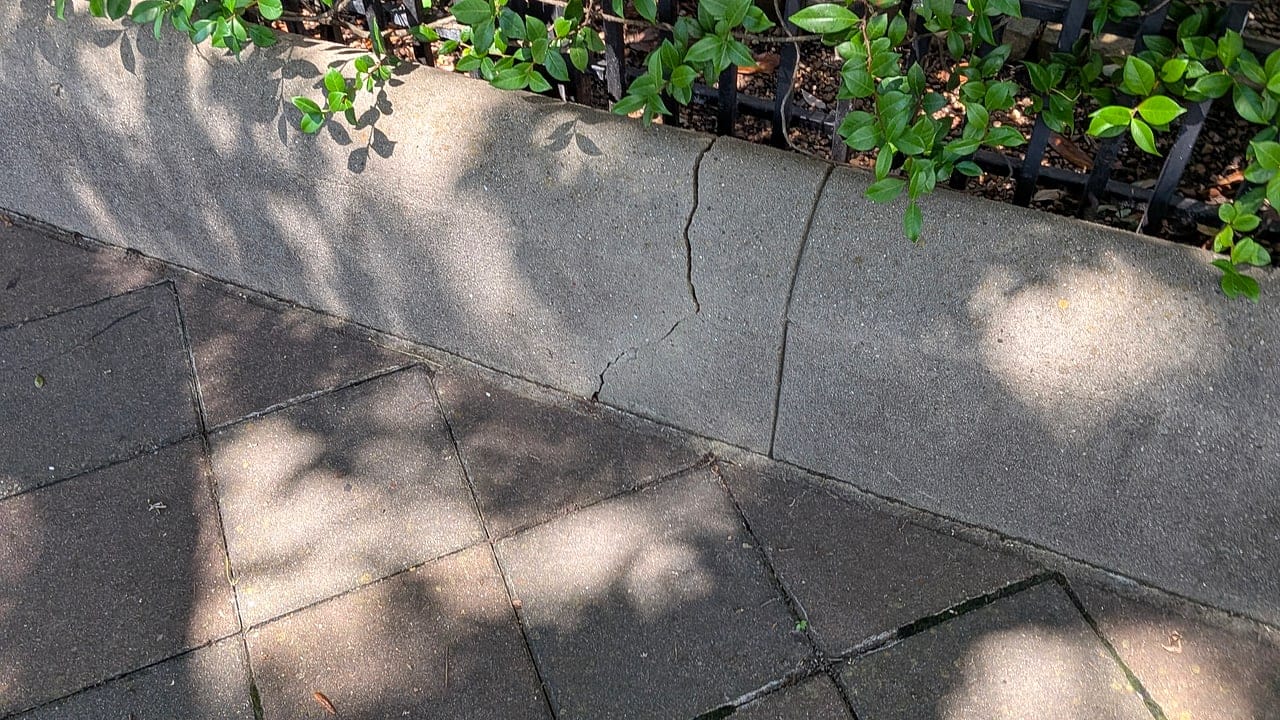
If you own residential or commercial real estate in the Houston, Brazoria, or Galveston regions, you are likely already familiar with the unique challenges of our local environment. Beneath the surface of our homes lies a highly active, dynamic layer of soil. Colloquially known as "Houston gumbo," this expansive clay soil is the primary driver behind the structural shifts we frequently observe during our inspections.
At Secured Inspections, we believe in client empowerment through data-driven education. Seeing a crack in your foundation or exterior masonry can be alarming, but not all fractures signal a catastrophic failure. By applying building science and rigorous diagnostic techniques, we can separate normal curing and minor settlement from severe structural deficiencies.
Here is a technical overview of the most common foundation cracks found in our region, and what they indicate about your property's structural health.
1. The Root Cause: The Shrink-Swell Cycle
Before diagnosing a crack, it is critical to understand the mechanics of Houston clay. Expansive soils act like a sponge. During periods of heavy Gulf Coast rainfall, the clay absorbs water and swells, exerting immense upward and inward pressure on concrete slabs. Conversely, during our intense summer droughts, the soil loses moisture, shrinks, and pulls away from the foundation, removing vital support. This relentless "shrink-swell" cycle stresses the concrete and inevitably leads to fracturing.
2. Identifying the Types of Cracks
3. Vertical and Hairline Shrinkage Cracks
The Appearance: Very thin, vertical cracks (typically less than 1/16th of an inch wide) running up the exposed concrete foundation.
The Science: Concrete is composed of water, cement, and aggregate. As the concrete cures and the water evaporates, the material slightly shrinks.
The Verdict: Generally, these are superficial and a natural part of the curing process. While they warrant monitoring to ensure they do not widen over time, they rarely impact the structural integrity of the home.
4. V-Shaped or Widening Vertical Cracks
The Appearance: A vertical crack that is wider at the top than at the bottom (or vice versa), creating a slight "V" shape.
The Science: This indicates differential settlement. One section of the foundation is sinking deeper or at a faster rate than the adjacent section, pulling the concrete apart.
The Verdict: This requires a professional evaluation. Using advanced altimeters and zip levels, our inspectors measure the elevation variances across the slab to determine if the settlement exceeds acceptable engineering tolerances.
5. Stair-Step Cracks in Masonry
The Appearance: Cracks that zig-zag through the mortar joints of brick or cinderblock exteriors, often starting near windows or doors.
The Science: While not technically on the foundation slab, stair-step cracks are a primary symptom of foundation distress. As the foundation shifts due to soil movement, the rigid masonry above cannot flex, resulting in shear failure along the mortar lines.
The Verdict: A high priority for inspection. If the cracks are wide enough to insert a coin, or if the bricks themselves are snapping, it indicates significant, ongoing soil movement.
6. Horizontal Cracks
The Appearance: A crack running parallel to the ground along the face of the foundation perimeter.
The Science: Horizontal cracks are often the result of hydrostatic pressure. When the clay soil is fully saturated, it expands laterally, pushing aggressively against the side of the foundation. Prolonged pressure can cause the concrete to snap horizontally.
The Verdict: High alert. Horizontal cracks can severely compromise the load-bearing capacity of the perimeter beam and frequently require intervention from a structural engineer.
7. Technical Mastery for Total Transparency
Navigating a real estate transaction requires reliable speed and unwavering accuracy. Guesswork is not an option when assessing a foundation.
If you observe any of the above signs, a visual glance is insufficient. A proper evaluation requires specialized tooling to measure floor elevations, moisture meters to assess the surrounding soil conditions, and a deep understanding of structural mechanics. At Secured Inspections, our engineering-grade approach ensures that you receive a transparent, comprehensive report detailing exactly what is happening beneath your feet—without the alarmist sales tactics.
Knowledge is your strongest asset in real estate.
8. Be Assured, Be Secured.
Need an Objective Forensic Property Inspection?
Residential Pre-Purchase, ASTM E2018 Commercial PCAs, Termite WDI, Sewer Camera Scopes, and FLIR Thermal Infrared diagnostics across Greater Houston, Galveston, and Brazoria.
