
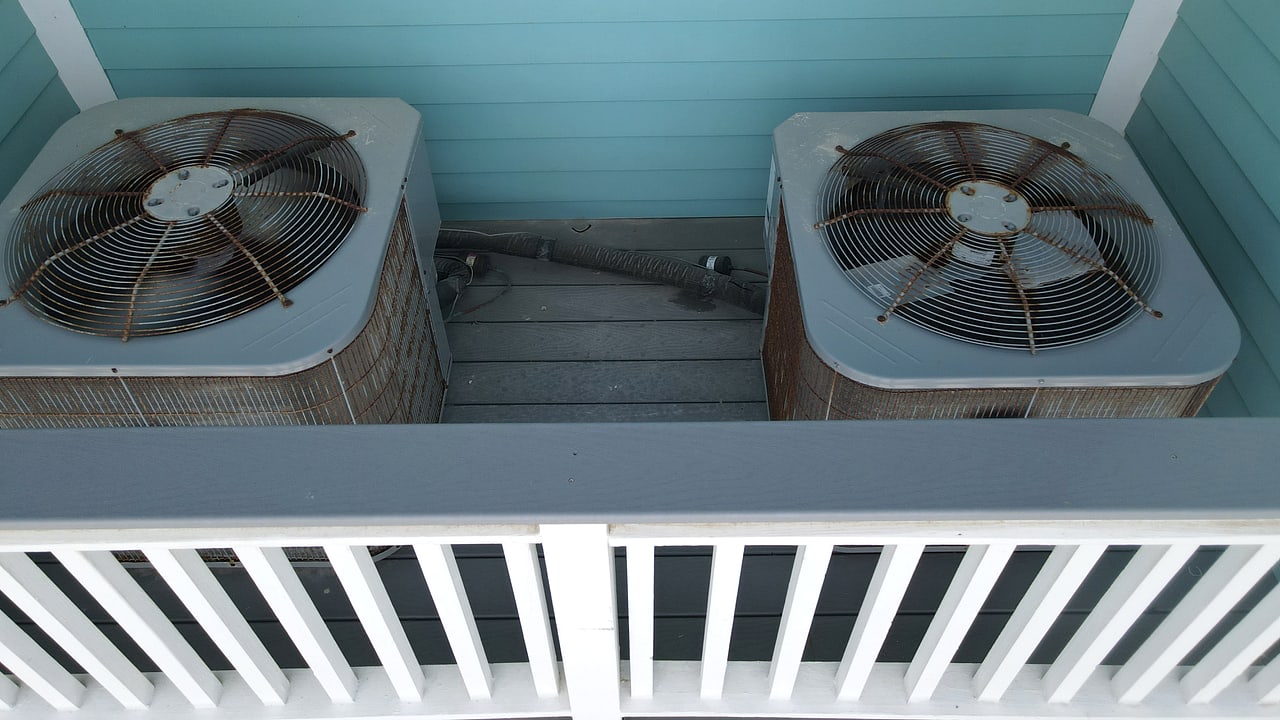
In commercial acquisitions across Houston, Sugar Land, The Woodlands, and the Galveston County industrial corridor, rooftop HVAC units (RTUs) represent one of the highest ongoing operational expenses and largest deferred capital liabilities. With ambient summer temperatures routinely exceeding 100°F on commercial reflective roofs and continuous humidity taxing latent cooling capacities, rooftop mechanical equipment operates near its engineering limits for seven months out of the year.
1. Decoding Commercial RTU Equipment Age and ASHRAE Baselines
Under the ASTM E2018-24 standard, commercial property inspectors must establish the Remaining Useful Life (RUL) and Expected Useful Life (EUL) for all primary mechanical systems. ASHRAE standards suggest a median 15-year life expectancy for packaged rooftop units. However, environmental factors dramatically alter this trajectory in Southeast Texas:
- Inland Commercial (Katy, Spring, Cypress): High cooling degree days and continuous compressor operation typically limit operational life to 12 to 14 years before major compressor replacement.
- Coastal Commercial (Galveston, Texas City, Freeport): Airborne chlorides accelerate galvanic corrosion between copper tubes and aluminum condenser fins, reducing operational life to 8 to 11 years without specialized epoxy coil coatings.
2. The 6-Point Physical RTU Audit Checklist
Secured Inspections performs an exhaustive forensic audit on every accessible commercial packaged unit, examining:
- Compressor Sound & Vibration: Listening for internal valve chatter, excessive bearing vibration, or thermal overload cycling across Stage 1 and Stage 2 scroll compressors.
- Condenser Coil Condition: Auditing for hail damage, fin flattening, and electrolytic corrosion. Hail compaction exceeding 20% of coil face area drastically reduces heat rejection efficiency and causes premature head pressure failures.
- Economizer Dampers & Actuators: Verifying enthalpy sensors and motorized damper linkages. In Texas, economizer dampers frequently seize in the open position, dumping hot 85°F humid outdoor air directly into the conditioned space.
- Gas Heat Exchangers & Combustion Blowers: On gas-fired RTUs, inspecting combustion chambers for metal fatigue, thermal stress fractures, and flue pipe corrosion that could leak carbon monoxide into commercial duct systems.
- Curb Adapter Flashing & Condensate Traps: Ensuring rooftop curbs are watertight and condensate P-traps maintain adequate water seals under negative plenum pressures to prevent biological slime overflow onto ceiling tiles.
- Electrical Disconnects & Contactor Pitting: Checking line-voltage disconnect switches, motor starters, and contactor points for severe electrical arc pitting that leads to single-phasing motor burnouts.
3. Phase Balance and Infrared Thermography
During commercial inspections, our certified thermographers scan running compressor terminal blocks and motor windings. Voltage phase imbalances greater than 2% create severe current imbalances in 3-phase commercial motors, raising internal operating temperatures by 25% for every 3.5% of imbalance. By isolating phase problems during due diligence, buyers avoid sudden motor burnouts within 60 days of closing.
Need an Objective Forensic Property Inspection?
Residential Pre-Purchase, ASTM E2018 Commercial PCAs, Termite WDI, Sewer Camera Scopes, and FLIR Thermal Infrared diagnostics across Greater Houston, Galveston, and Brazoria.
