
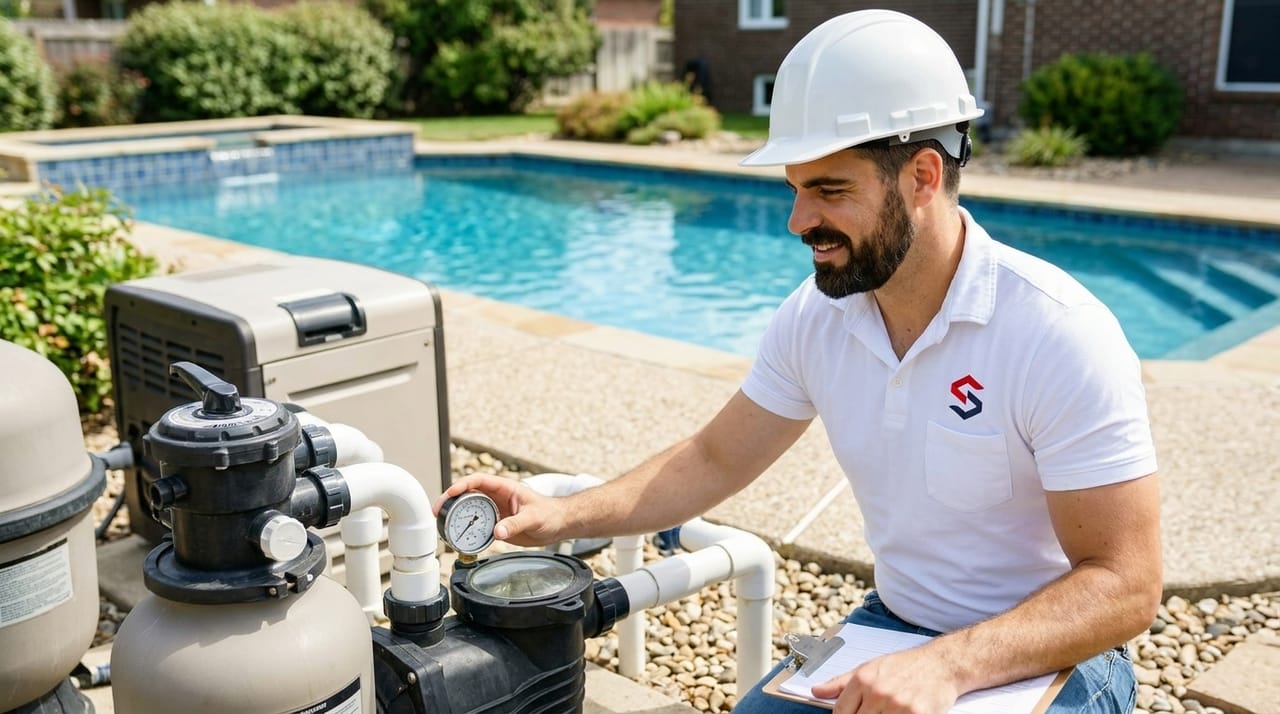
In the sweltering climate of Texas, in-ground swimming pools and attached spas are premier residential amenities. However, swimming pools are complex hydraulic and electrical systems operating in high-groundwater, corrosive environments. Under TREC §535.233 and the International Swimming Pool and Spa Code (ISPSC), an exhaustive pool inspection evaluates physical shell integrity, hydraulic filtration, sanitization systems, and critical life-safety electrical bonding.
1. NEC Article 680: Equipotential Bonding Grids
Water and electricity are a fatal combination. Under National Electrical Code (NEC) Article 680, all conductive metal elements of an in-ground pool—including the structural reinforcing steel (rebar), metallic pool shell components, ladder sockets, underwater light wet-niches, and pool equipment pump motors—must be bonded together into a continuous equipotential bonding grid using a solid 8 AWG bare copper conductor.
This grid eliminates voltage gradients in the pool area, ensuring that if stray voltage leaks from a defective pump motor or subpanel, the electrical potential across the water, deck, and metal fixtures remains equal, preventing electrocution shocks to swimmers.
2. Virginia Graeme Baker (VGB) Anti-Entrapment Compliance
Federal law (the Virginia Graeme Baker Pool and Spa Safety Act) mandates that all pool main drains feature anti-vortex, anti-entrapment drain covers certified to ANSI/APSP-16 standards. Suction entrapment occurs when a swimmer's body or hair is drawn against a flat suction outlet. Compliant installations utilize either dual main drains spaced at least 36 inches apart on a common suction manifold or an unblockable large-format drain grate with current expiration date stamp.
3. Plaster Delamination, Coping Cracks & Skimmer Throats
In Houston's expansive clay soils, ground shifting exerts immense stress on pool shells. Our inspectors audit:
- Plaster Delamination & Hollows: Tapping plaster surfaces with a sounding rod to detect hollow spots where plaster has separated from underlying gunite.
- Skimmer Throat Shear Cracks: The expansion joint between the pool coping and concrete deck frequently fails, allowing deck movement to shear the plastic skimmer box off the pool wall, causing underground water leaks.
- Hydrostatic Relief Valves: Ensuring hydrostatic relief plugs are intact to prevent high groundwater from popping the pool out of the ground when drained.
4. Forensic Diagnostic Equipment & Quality Assurance Protocols
Specialized environmental and forensic property diagnostics require calibrated laboratory-grade instrumentation. In our regional assessments across Houston, Galveston, and Brazoria, Secured Inspections follows strict chain-of-custody and quality assurance standards:
- Calibrated Instrumentation: Utilizing high-resolution FLIR® thermal imaging cameras, Tramex non-invasive impedance moisture meters, and digital pin probes verified against standard calibration blocks prior to field deployment.
- AIHA and NELAP Accredited Laboratories: All biological spore trap cassettes, lead-based paint dust wipe samples, and drinking water collection vials are shipped under strict chain-of-custody protocols to third-party accredited laboratories for independent microscopic and chemical analysis.
- Environmental Baseline Controls: Pulling duplicate indoor and outdoor control samples under identical temperature, barometric pressure, and humidity conditions to eliminate false positives and establish true indoor amplification.
- Texas Statutory Regulatory Compliance: Operating under active licenses issued by the Texas Department of Licensing and Regulation (TDLR Mold Assessment Consultant #1974) and Texas Department of Agriculture Structural Pest Control Service (SPCS #089201).
Whether diagnosing hidden subterranean cast iron pipe failures, toxic fungal contamination, or unbonded gas piping hazards, our laboratory-backed findings provide unambiguous documentation to protect occupant health and real estate equity.
Need an Objective Forensic Property Inspection?
Residential Pre-Purchase, ASTM E2018 Commercial PCAs, Termite WDI, Sewer Camera Scopes, and FLIR Thermal Infrared diagnostics across Greater Houston, Galveston, and Brazoria.
