
Beneath the vibrant residential and commercial landscapes of Greater Houston, Katy, Pearland, and Galveston County lies one of the most notoriously volatile soil classifications in civil engineering: expansive montmorillonite clay, colloquially known as "Houston black gumbo." Understanding the soil mechanics of this reactive clay is vital to preserving structural foundation integrity.
1. The Geophysics of Expansive Montmorillonite Clay
Montmorillonite clay possesses an expanding lattice crystal structure. When water molecules penetrate between the microscopic silicate sheets, the soil undergoes dramatic volumetric expansion, swelling by up to 20% to 30% and exerting upward uplift pressures exceeding 5,000 pounds per square foot. When rain ceases during intense Texas summer droughts, water evaporates from the soil pores, causing catastrophic shrinkage and structural settlement.
2. The Foundation Moisture Maintenance Program
Concrete slab-on-grade foundations are engineered to support uniform loads, but they cannot tolerate differential movement—where one corner of the house drops 1.5 inches while the center remains elevated. Maintaining uniform soil moisture around the entire foundation perimeter is the only proven defense against slab movement:
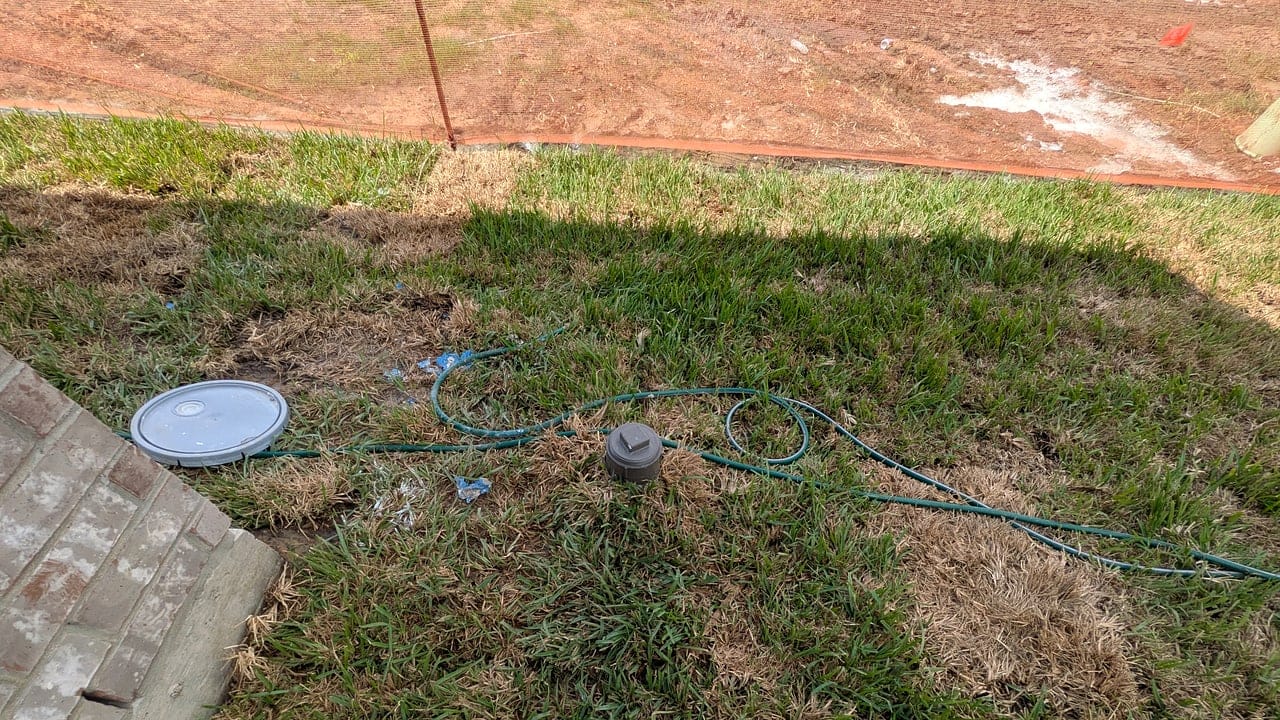
- Soaker Hose Positioning: Lay flat, perforated soaker hoses 12 to 18 inches away from the perimeter foundation beam. Placing them directly against the concrete causes erosion channels beneath the footing.
- Automated Watering Timers: During hot, dry summer months (June through September), run soaker hoses for 15 to 20 minutes twice daily (early morning and late evening) to maintain consistent moisture consistency (resembling damp garden soil, not standing mud).
- Tree Root Competition: A mature Live Oak or Pine tree can absorb 150 to 250 gallons of groundwater daily. When planted within 15 feet of a foundation, tree roots extract moisture from beneath the grade beam, creating localized soil consolidation and corner foundation settlement. Installing physical root barriers is highly recommended.
3. Precision Elevation Mapping with Digital Altimeters
Secured Inspections utilizes the ZipLevel® Pro-2000 High Precision Altimeter during every residential inspection. By recording dozens of elevation data points across the interior slab plane referenced to an absolute benchmark, our inspectors map foundation deflection contours to determine if movement exceeds the Texas Section of the American Society of Civil Engineers (ASCE) Guidelines for Residential Foundation Evaluation.
4. Coastal Building Science & Hurricane Hardening Standards
Properties built along the Texas Gulf Coast face distinct environmental stressors that inland structures rarely encounter. Preserving building longevity and insurance eligibility requires rigorous adherence to coastal building science principles:
- TDI Catastrophe Area Compliance: Verifying continuous structural load paths from roof rafters through wall framing down into foundation pilings in accordance with Texas Department of Insurance (TDI) windstorm building codes.
- Marine Atmospheric Corrosion Protection: Auditing exterior mechanical disconnects, HVAC condenser coils, and structural fasteners for hot-dip galvanized or 316 stainless steel coatings to resist aggressive sodium chloride salt fog corrosion.
- Psychrometric Moisture Management: Evaluating building envelope air-tightness, vapor retarder placement, and dedicated dehumidification systems to prevent hot humid outdoor air from condensing against air-conditioned interior surfaces.
- Storm Surge and Hydrostatic Relief: Ensuring ground-level enclosures below the Base Flood Elevation (BFE) incorporate engineered hydrostatic flood vents and breakaway wall assemblies to protect primary structural supports during extreme storm surge events.
Understanding these localized Gulf Coast building dynamics empowers property owners to make informed purchasing decisions, lower annual flood and windstorm insurance premiums, and protect against catastrophic storm losses.
Need an Objective Forensic Property Inspection?
Residential Pre-Purchase, ASTM E2018 Commercial PCAs, Termite WDI, Sewer Camera Scopes, and FLIR Thermal Infrared diagnostics across Greater Houston, Galveston, and Brazoria.
