
Executing an earnest money contract to purchase a home in Texas is exhilarating, but the clock starts ticking the very second both parties sign. Under the standard Texas Real Estate Commission (TREC) One to Four Family Residential Contract (Resale), buyers typically purchase an Option Period—an unrestricted contractual window spanning five to ten calendar days. During this critical interval, you have the absolute legal right to terminate the contract for any reason whatsoever and recover your full earnest money deposit. Maximizing this finite window requires understanding exactly what happens during a professional home inspection and how forensic data protects your financial future.
1. The Texas Option Period Mechanics: Time is Your Most Valuable Asset
In Texas, the Option Period is governed by Paragraph 5 of the TREC contract. You pay an option fee directly to the escrow title company within three calendar days of effective execution. That fee purchases your unrestricted right to investigate the physical reality of the structure. However, the deadline is strict: your right to terminate expires promptly at 5:00 PM local time on the final calendar day specified in the contract.
Because obtaining contractor repair quotes, structural engineering opinions, and negotiating contract amendments requires 48 to 72 hours, you must schedule your inspection for Day 1 or Day 2 of your option period. Waiting until Day 5 creates immense pressure, leaving zero runway to obtain specialized bids if significant foundation movement, damaged sewer mainlines, or obsolete electrical panels are discovered.
2. Anatomy of the Inspection: What Happens On-Site
A thorough, certified residential inspection on a 2,200-square-foot Texas home requires approximately 3 to 4 hours of methodical evaluation. At Secured Inspections, our licensed professional inspectors systematically dissect the home across five primary operational systems:
- Structural Systems & Foundation: Evaluating concrete slab-on-grade or pier-and-beam crawlspaces for structural deflection, differential settlement, wood rot, subfloor sag, and exterior brick frieze separation.
- Roof Assembly & Attic Cavity: Walking the roof decking (or deploying high-definition 4K aerial drones when slope or height prohibits safe walking) to examine shingles, flashing kickouts, plumbing penetrations, chimney cricket flashings, and attic ventilation.
- Electrical Service Infrastructure: Removing the deadfront panel cover to inspect service entrance conductors, branch circuit breaker sizing, aluminum wiring connections, neutral-ground bonding, and AFCI/GFCI protection.
- HVAC Performance & Heat Transfer: Testing cooling temperature splits across evaporator coils, auditing auxiliary electric heat strips, measuring duct static pressures, and verifying condensate primary and secondary drain float switches.
- Plumbing Distribution & Gas Systems: Checking static water supply pressure at hose bibbs, testing water heater temperature-pressure relief (TPR) valves, surveying visible PEX, copper, or galvanized piping, and using combustible gas sniffers around gas supply lines and furnace manifolds.
3. Advanced Diagnostic Equipment You Must Demand
A standard flashlight and basic outlet tester are no longer adequate for complex Texas building forensics. High-liability defects frequently hide behind fresh paint, inside inaccessible ceiling cavities, or under solid concrete foundations. When choosing an inspection partner, verify that they utilize advanced instrumentation:
- ZipLevel® Digital Manometer Elevation Mapping: Measures foundation floor elevations across 15 to 30 baseline reference points down to 0.1-inch accuracy, pinpointing foundation heave or downward slope that visual observation cannot detect.
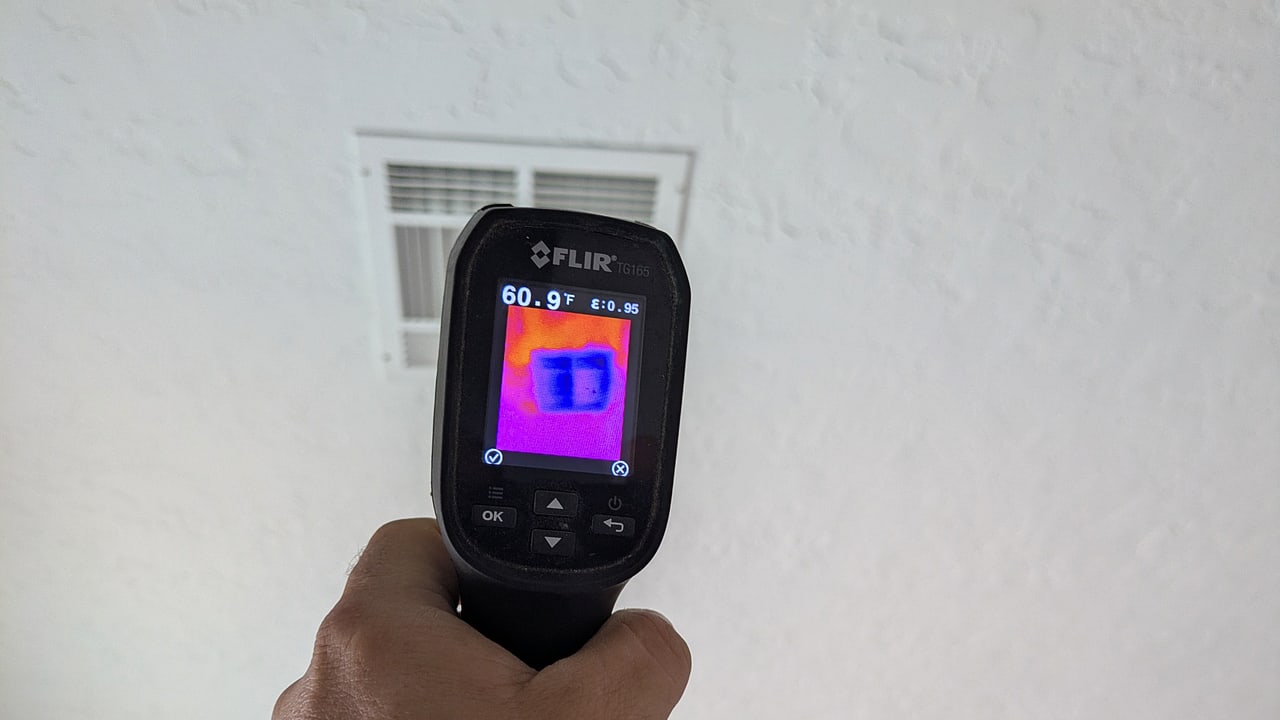
- FLIR® High-Resolution Infrared Thermography: Visualizes thermal anomalies, identifying missing ceiling insulation, overheating circuit breakers under load, and hidden plumbing leaks inside drywall cavities without puncturing surfaces.
- HD Self-Leveling Sewer Scope Cameras: Traverses 100+ feet of underground waste pipes out to the municipal connection, identifying root intrusion, bellies (standing water holding sludge), sheared cast iron, and separated PVC transitions.
- Digital Pinless & Invasive Moisture Meters: Quantifies relative moisture percentages in baseboards, bathroom subflooring, and window sills to detect active water intrusion before toxic mold colonies form.
4. Decoding the TREC Form REI 7-6 Inspection Report
All licensed Texas inspectors are required by law to document findings on TREC Form REI 7-6. The report classifies inspected items into distinct statutory categories: Inspected (I), Not Inspected (NI), Not Present (NP), and Deficient (D).
It is completely normal for a comprehensive 40-to-60-page report to list 25 to 45 separate deficiency items. First-time buyers often panic upon seeing red checkmarks. However, a forensic inspector will clearly distinguish between cosmetic maintenance items (such as uncaulked tub surrounds or dirty furnace air filters) and critical safety or structural concerns (such as an ungrounded subpanel, active gas manifold leak, or severe foundation slope exceeding the Texas ASBI allowable deflection standard).
5. Strategic Post-Inspection Negotiation Leverage
Once you receive your digital report—delivered the very same evening by Secured Inspections—you and your REALTOR® enter the negotiation phase. You generally have three strategic options:
- Request a Direct Seller Financial Credit: Rather than relying on the seller to hire the cheapest contractor to patch an issue, negotiate a closing cost credit or price reduction. This preserves your capital to hire top-tier licensed contractors after closing.
- Execute a TREC Amendment for Targeted Repairs: If requesting physical repairs, mandate that work must be performed by state-licensed trades (e.g., master electricians or licensed plumbers) with written receipts and transferrable warranties provided prior to the final walk-through.
- Exercise Your Unrestricted Right to Terminate: If the home reveals insurmountable systemic structural distress, polybutylene plumbing, or extensive mold infestation that the seller refuses to remedy, you can sign TREC Form TXR-1902 (Notice of Buyer's Termination of Contract) prior to the 5:00 PM deadline, recover your entire earnest money, and walk away clean.
Need an Objective Forensic Property Inspection?
Residential Pre-Purchase, ASTM E2018 Commercial PCAs, Termite WDI, Sewer Camera Scopes, and FLIR Thermal Infrared diagnostics across Greater Houston, Galveston, and Brazoria.
